Asking for ourselves
Why is asking for money, or for help, so hard for leaders? Lucy Caldicott on pricing yourself properly, going independent and being coached yourself.

A very warm welcome to new subscribers - so glad you're here!
When you work for yourself, nobody else generates your income. There's no salary landing at the end of the month. If you don't ask, nothing comes in, yet I've always found asking one of the toughest parts of self-employment.
In my charity career I asked people for money (almost) without flinching. Funders, donors, trustees, corporate partners. I would make passionate cases for the mission over and over again, and supported my teams to do the same. But asking someone to pay me, for my time and my experience, is completely different.
This week I've been working through follow-ups with people who got in touch since the beginning of the year about coaching. I reply to every initial enquiry within a day or two but following up again feels pushy. Which is a bit silly when they were the ones who made contact with me in the first place. These emails had been on my to do list for ages. Other tasks got done, but this one kept slipping into the following week and the week after that, and so on.
I don't think I'm alone in this. Research from IPSE, the main UK body for freelancers and contractors, found that self-employed women in the UK earn £51 less per day than men on average, which means a woman working full time could be £12,266 worse off per year. It isn't as simple as charging more, because a man who negotiates his rate up is seen as confident while a woman can be seen as difficult and many of us carry that judgement around in our own heads, regardless of what any client says. In the charity sector we've had years of practice at apologising for our own cost, treating ourselves as the overhead to be squeezed as thin as possible.
It isn't only money I find hard to ask for. Part of my coaching training involved peer coaching with other people on the course. I'm perfectly happy being the coach (fortunately!). But being coached myself, saying out loud what I actually wanted help with, felt far more uncomfortable than I expected.
I think this is part of the same story. If you've spent your career being the person others come to, the one with the answers, asking for help feels awkward. And it gets harder, not easier, the more senior you are. When a leader is in a genuinely tricky situation, that's often precisely when they withdraw and try to manage everything alone. It's hard because who are you supposed to ask? Whose job is it to look after the person in charge?
So if you're thinking about striking out on your own, here are some things I wish I'd thought about sooner. Your day rate is not your old salary divided by working days. Holidays, sick days, admin, chasing invoices, learning, finding the next piece of work: none of those are billable, and when you work out how many days you can realistically charge for in a year, the number might surprise you. It changes how your rate feels. Following up an enquirer is part of a conversation, not an imposition. Silence could look like you don't care.
I'll leave you with two questions:
- If you've been in sales, marketing, communications, fundraising etc, what would happen if you made the same case for yourself?
- And who could you ask for help this week, before you need it?
🚪 The Changing Room
The Changing Room community is up and running now, and I'm so pleased with how it's started. We have 17 members already, from the USA, Spain, Ireland, Austria and the UK. Our first live Q&A was a proper conversation about what we want this community to be and how we can help each other, and it set exactly the tone I'd hoped for.
The next live Q&A is on Wednesday 28 October at 5.30pm, and it's for members only, so if you'd like to be there, now's the time to join. This link takes you straight in:
It's completely FREE for the first 50 founder members for their first three months.
Get Ready for 2027 is my coaching programme for anyone who wants to go into next year with a plan rather than a vague hope: three one-hour sessions with me between now and the end of December, for £675. There are ten places, and some have already gone. If you want to find out more, hop on a free call with me before 26 October, bookable here.
What am I reading? 📚
I'm very much enjoying Our Oaken Bones, not least for the stories of their beaver family, Sigourney, Jean-Claude Van Dam, Beavie Nicks and Beavie Wonder.
What am I listening to?👂
Listen to my song by Darondo. Beautiful.
Joy-giving things 😍
It's a bit cloudy today but our solar panels have saved 84kg CO2 in a week! Rejoice!
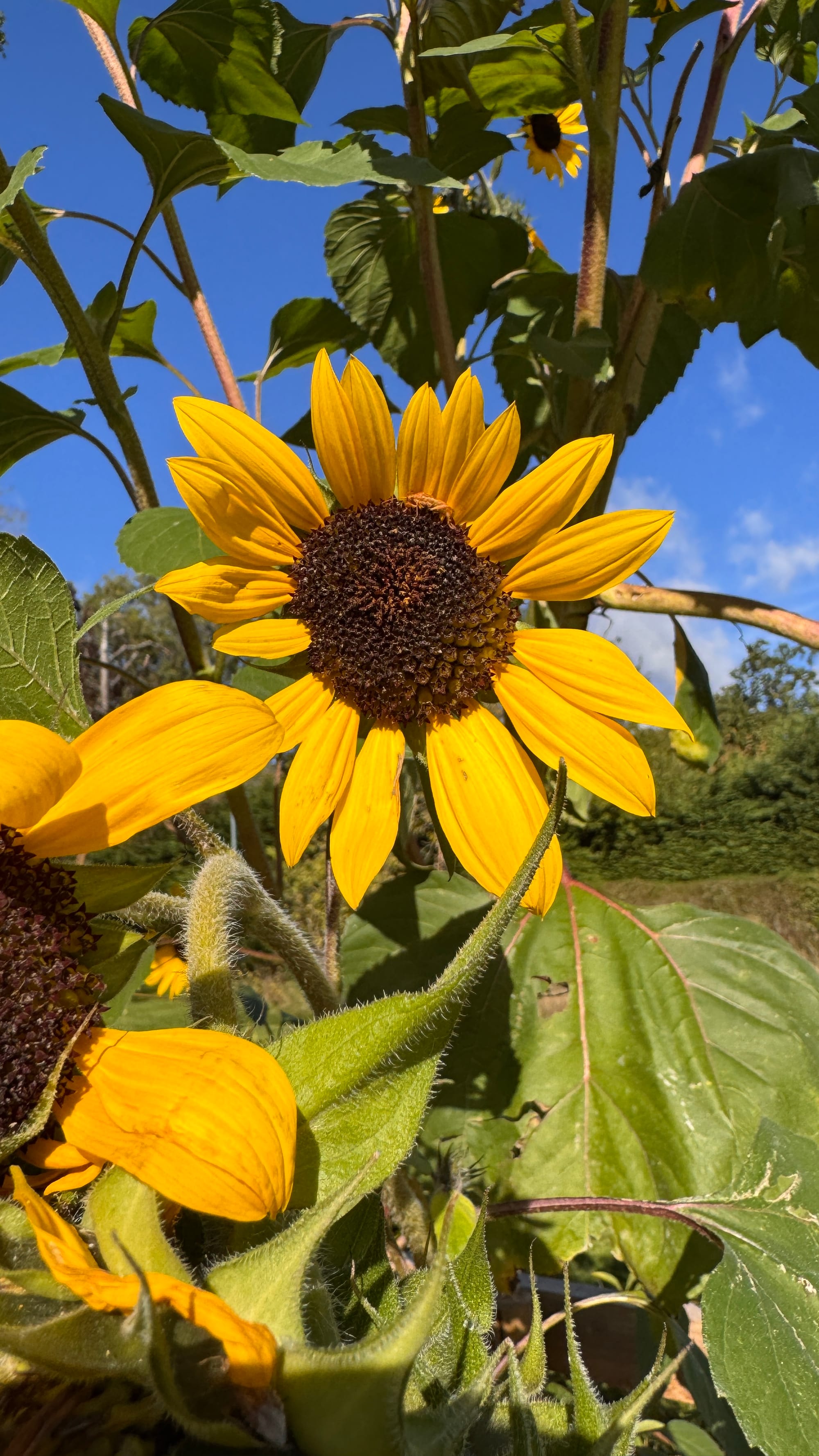
In honour of our solar panels, have one of these bad boys. I'm hoping I'll be able to keep them going long enough for their seeds to form for the birds.
Have a great weekend
Lucy 🌻
I've been writing regular blogs since 2020. If you want to have a look at my back catalogue, they are all here.
If you're wondering whether coaching might help you think through where you are and where you're going next, I'd love to hear from you.
You can also find me on Instagram, Threads, and LinkedIn.
🎬🎬🎬 YouTube 🎬🎬🎬
If you like what you read and you'd like to show your appreciation in cash, you can do that here. I'd be very grateful!
ChangeOut - Leadership . Purpose . Impact Newsletter
Join the newsletter to receive the latest updates in your inbox.