We were meant to do this together
Belonging isn't a team away day or a diversity dashboard. It's something older and more fundamental than that. And most workplaces are working against it.

Whenever I share a quote in this newsletter that I've read on the internet, I go back and check where it came from. Really quite often, I find there's no evidence for the person having said whatever it was. This week it happened again.
You may have seen this one: "In the long history of humankind (and animal kind too), those who learned to collaborate and improvise most effectively have prevailed." It circulates everywhere, usually credited to Charles Darwin. I went looking for the source, as usual, and found this instead. He never said it. He never wrote it. I don't know who did.
What I did find instead, in Darwin's The Descent of Man written in 1871, is better. He wrote that a tribe whose members were "always ready to aid one another, and to sacrifice themselves for the common good, would be victorious over most other tribes." Not the strongest. Not the cleverest. Not the ones who worked the longest hours. The ones who supported each other.
The benefits of collaboration are not new ideas but we do still have to make the case for it in workplaces every single week.
Human beings are not built for isolation. Belonging is not a nice-to-have, it's a survival mechanism. When we feel excluded or unseen at work, we feel it in our bodies. We're not being over sensitive. That's a very old alarm going off.
Belonging is one of those words that gets used a lot in organisational life without anyone stopping to ask what it actually means in practice.
Here's what I think. Belonging is not the same as being invited to a meeting. It's not a diversity dashboard or a team away day. It's not the pizza after a long work day. Those things are fine, but they are not belonging. Belonging is what happens when someone can relax into being themselves at work and find that there's room for them. When they can disagree, or need more time to complete a task, or say "I don't know," and not be penalised for any of it. When they feel, truly and deeply, that they matter to the people around them.
That's much harder to manufacture than a team lunch. And it doesn't happen by accident.
There's research suggesting that workers who feel a strong sense of belonging are more likely to perform well, less likely to leave, and significantly less likely to take sick days. People do better when they feel like they belong.
And yet so many of our workplace structures work against it. The performance management frameworks that rank people against each other. The cultures where showing uncertainty reads as weakness. The teams where certain voices consistently get more airtime than others, and nobody names it. These are not neutral conditions. They actively undermine the sense of safety that belonging requires.
If you're a leader reading this, here's a question. Do the people in the teams you lead actually feel like they belong, and how would you know?
Day of the Week 📆
Happy Floralia 🌸
What am I reading? 📚
One of the parts of my coaching course work is writing an assignment about my critical learning moments during my coach development. I'm finding Claire Pedrick's work very helpful and am currently reading her book The Human Behind the Coach: How great coaches transform themselves first.
What am I watching? 👀
Hearts and teddy bears, anyone? Let's watch Judi Dench's favourite things. An interview with Roy Plomley from 1985.
What am I listening to?👂
Fascinating account of the people who live at the last stop before the North Pole, Longyearbyen, where no trees or crops grow.
Joy-giving things 😍
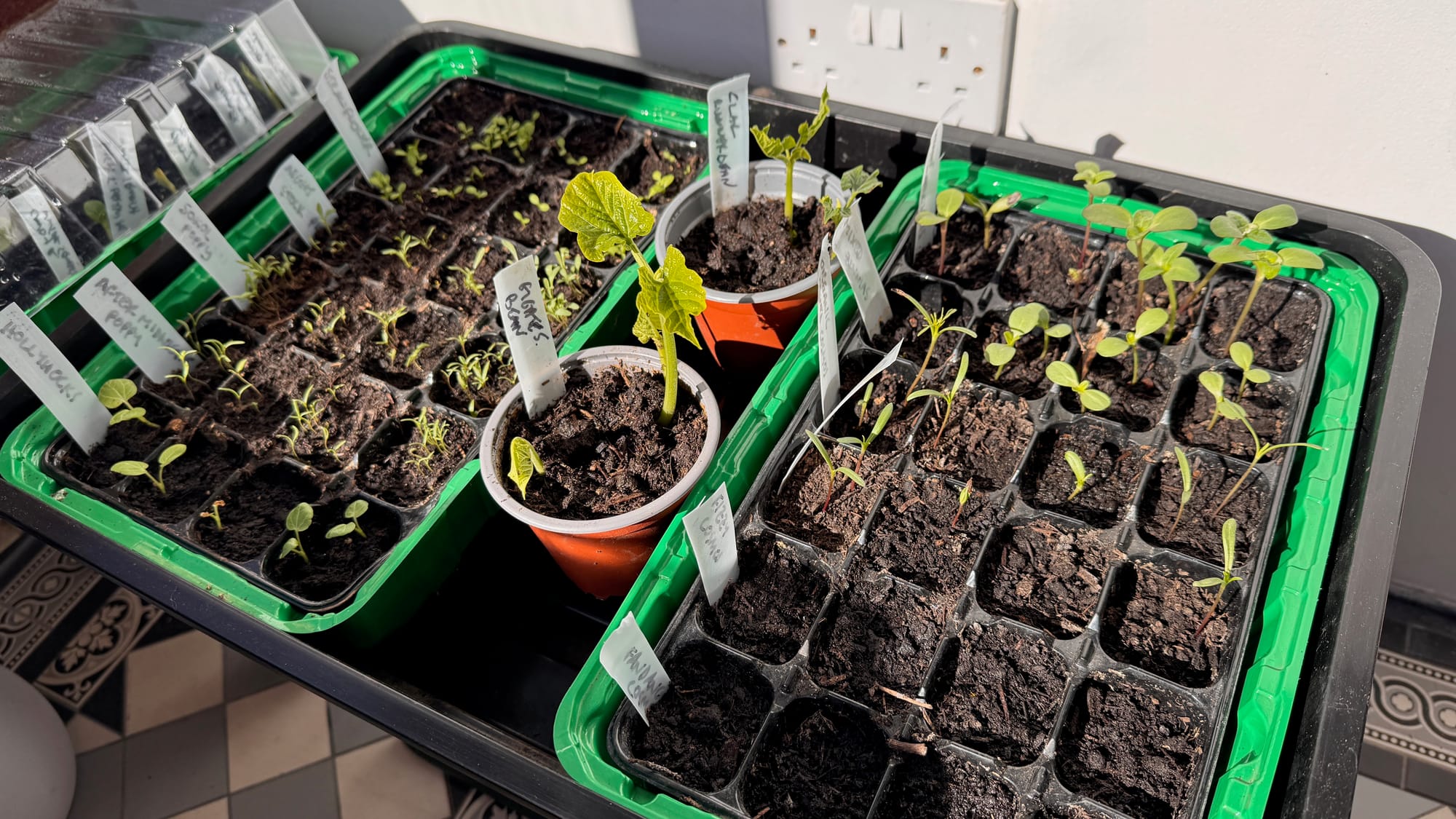
The seeds we planted are coming up. If you're feeling down, poke a sunflower seed into a bit of soil in a pot and smile when it sprouts.
Take care
Lucy
ChangeOut is created by Lucy Caldicott. You can find more about my work at ChangeOut.org.
If you're a purpose-driven professional wondering whether coaching might help you think through where you are and where you're heading, I'd love to hear from you. I'm opening up coaching spaces later in 2026. Express your interest here.
You can also find me on Instagram, and LinkedIn.
🎬🎬🎬 YouTube 🎬🎬🎬
If you like what you read and you'd like to show your appreciation in cash, you can do that here. I'd be very grateful!
ChangeOut - Leadership . Purpose . Impact Newsletter
Join the newsletter to receive the latest updates in your inbox.