Measure what you treasure
Why wellbeing drives performance, why we should measure what we treasure, and what a shared lunch in Bangladesh taught me about working well together.

Welcome to new readers! So glad to have you here.
Back in 2005 I was in Bangladesh delivering some training at VSO's office there. This week, I was reminded of the office lunches I had during that trip.
There was a kitchen and cook on site. In the middle of the working day, everyone stopped working and lunch was served. It wasn't a special event or a team-building exercise, no facilitator or flipchart, just the ordinary daily rhythm. I remember thinking at the time what a very good thing it was. In all the work day lunches I've had over the years, freshly cooked jackfruit curry and mangoes from the tree in the courtyard outside the office is definitely one of the best.
What brought this memory back was listening to the latest episode of Bruce Daisley's podcast, Eat Sleep Work Repeat, on the business case for culture. His guest was Jan-Emmanuel De Neve, Professor of Economics and Behavioral Science at Oxford's Saïd Business School and Director of the Wellbeing Research Centre. The topic they were exploring was whether how people feel at work is a nice-to-have, or does it filter through into results?
The evidence shared was striking. In a study of BT call centres, a one standard deviation improvement in how people felt was linked to a 12% rise in weekly sales, which was described as a conservative estimate. When it came to what influences how people feel at work, the friends they have at work and a sense of belonging are more important than pay and terms and conditions.
His advice to managers was simple: "measure what you treasure". He makes the point that leaders should regularly measure well-being if they want to improve it, tracking things like job satisfaction, happiness at work, stress and sense of purpose. It's straightforward to count numbers of clients and income, and we report diligently on all of it to investors, funders and boards. It's far rarer to be able to report how our own people are doing. If the things we count are the things we treasure, then what we choose not to count tells its own story.
Time for lunch! Using Gallup World Poll data, Professor De Neve reported that solo eating in the US increased c 50% between 2003 and 2023, and that fewer than half of lunches are shared in the UK and US. Now that more people are working from home part of the week, his simple suggestion is to coordinate in-office days and offer shared lunches, to build belonging and cut down on email. We all know that a brief lunch conversation can save multiple emails and meetings.
Another point I found really useful, because it centres the issue into job design and away from individual behaviour. Packed morning meeting schedules can push people to eat alone. If the way an organisation operates makes lunch impossible, telling people to take a break is not much of a policy.
There is a question of equity in here too. Who is at the table, and who is eating at their desk with the door closed? Who is part-time and missing the corridor conversations? Who works from home and never overhears the thing that mattered? Who has learned that taking a lunch break looks like a lack of commitment? A shared eating space only works if everyone can actually use it, and in a world of work that so often rewards the person who skips the break, that is a leadership decision, not a personal one.
Let me know your thoughts on this. What are you measuring that tells you how your people are, and when did you last sit down to eat with them? Sadly we can't all have our own in-house Bangladeshi chef but you could start with planning a team lunch.
Useful links 🔗
Bruce Daisley's Eat Sleep Work Repeat, the episode on the business case for culture and why well-being drives performance, with Jan-Emmanuel De Neve. Might be handy if you need to persuade a sceptical board.
What am I reading? 📚
I've been reading and researching various books on similar topics to the ones I write about. Working on Purpose by Ellen Scott is about career contentment. Do let me know any recommendations.
What am I watching? 👀
I enjoyed watching this interview with Courtney Pine, the jazz saxophonist, on his 40 year career. I went to see him at the Jazz Cafe in the 90s.
What am I listening to?👂
Here's some Courtney Pine for your ears.
Joy-giving things 😍
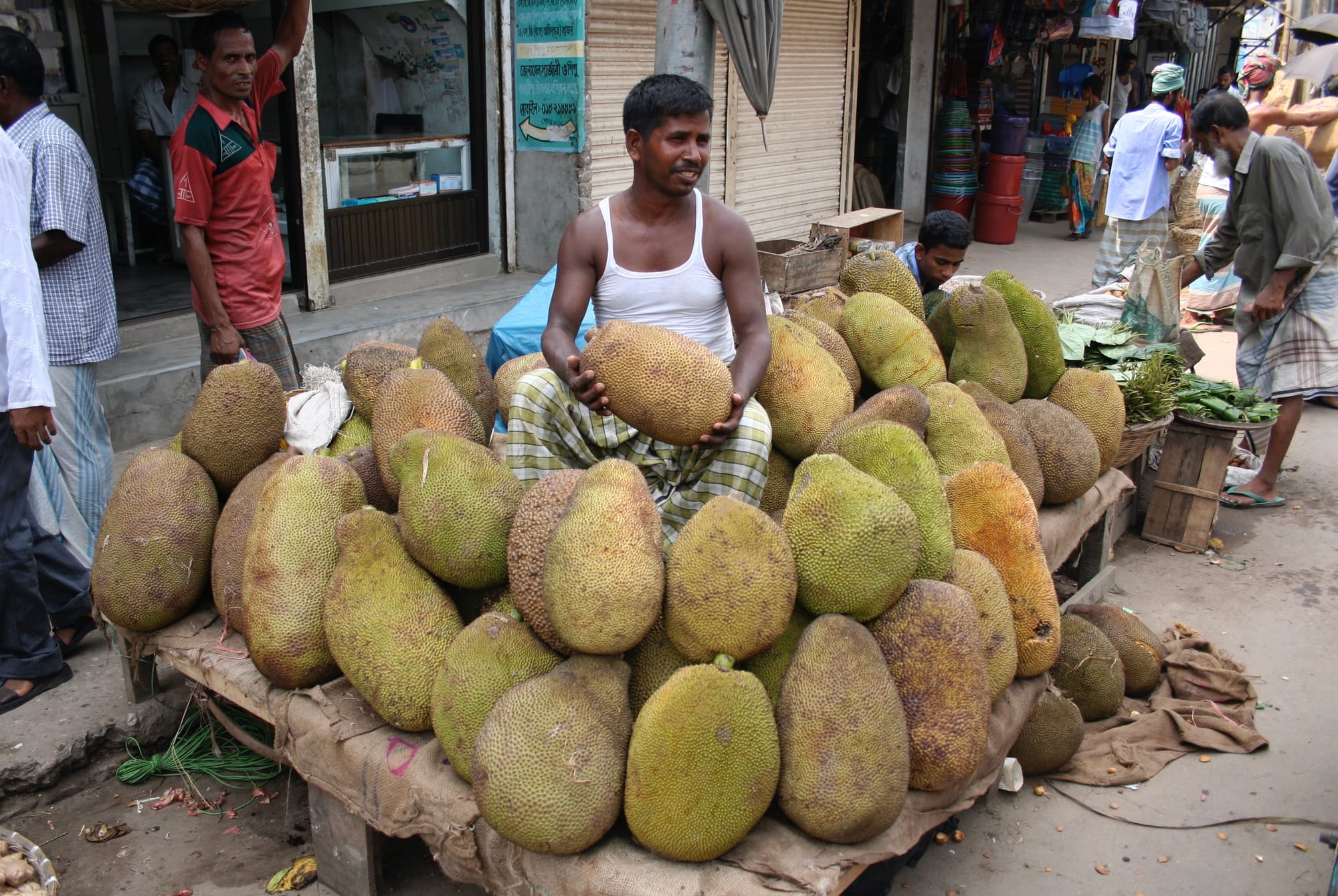
Inspired by the memories above, I had a look back through my Bangladesh photos. Here's a jackfruit stall in the food market in downtown Dhaka. I really enjoyed that trip. Maybe I'll get to eat jackfruit curry there again one day.
Have a good weekend and please take a proper lunch break!
Lucy
I've been writing regular blogs since 2020. If you want to have a look at my back catalogue, they are all here.
If you'd like to work with me 1:1 or if you're organising an event and you're looking for a speaker, or anything else you think I can help with, have a look at what I do here and contact me in the linked forms. I'd love to hear from you.
Do come and join us in the Changing Room, a private online community for purpose-driven professionals who want somewhere to think, talk and work out what comes next - includes two Q&As with me every month.
You can also find me on Instagram, Threads, and LinkedIn.
🎬🎬🎬 YouTube 🎬🎬🎬
If you like what you read and you'd like to show your appreciation in cash, you can do that here. I'd be very grateful!

ChangeOut Newsletter
Join the newsletter to receive the latest updates in your inbox.